
Contra Labs has been studying how working creatives integrate AI into their workflows. What emerged is a consistent 3-stage structure: ideation, mockup, refinement. The way creatives use AI shifts significantly at each one.
Stage 1: Ideation
This is where AI adoption is highest and the grip is loosest. Creatives are generating direction, not final artifacts, so handing work to AI carries low stakes. Breadth matters more than precision.
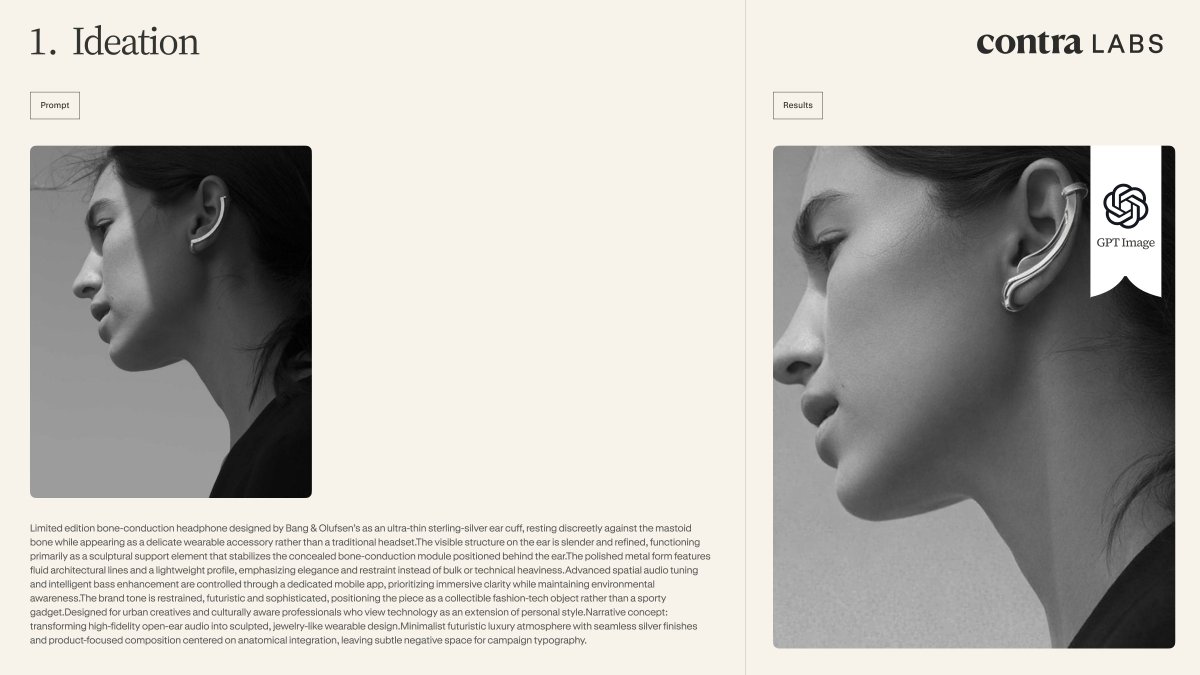
Generally I start loose and see what comes up. From there I refine and hone in on what I'm not getting, and adjust prompts to be more in line with my ideas. I think doing this leaves a lot of opportunity for surprise and serendipity.Sam Allen, motion designer and animator (Google, Apple, TikTok)
Previously, if you didn't know any expert program or didn't know how to draw, expressing something you had in mind was nearly impossible. Now, you can just describe the emotion you are feeling and what you envision and there is a high chance you will convey that vision onto others.Kamil Betterside, mobile app developer
AI helps me experiment without limits. It's become a kind of creative partner, helping me get from concept to something visually exciting much quicker.Sana Studio, brand designer
Stage 2: Mockup
A direction is chosen. Now it gets built into something real. Creatives use AI to draft, prototype, and assemble references into a coherent artifact. The output starts to have stakes.
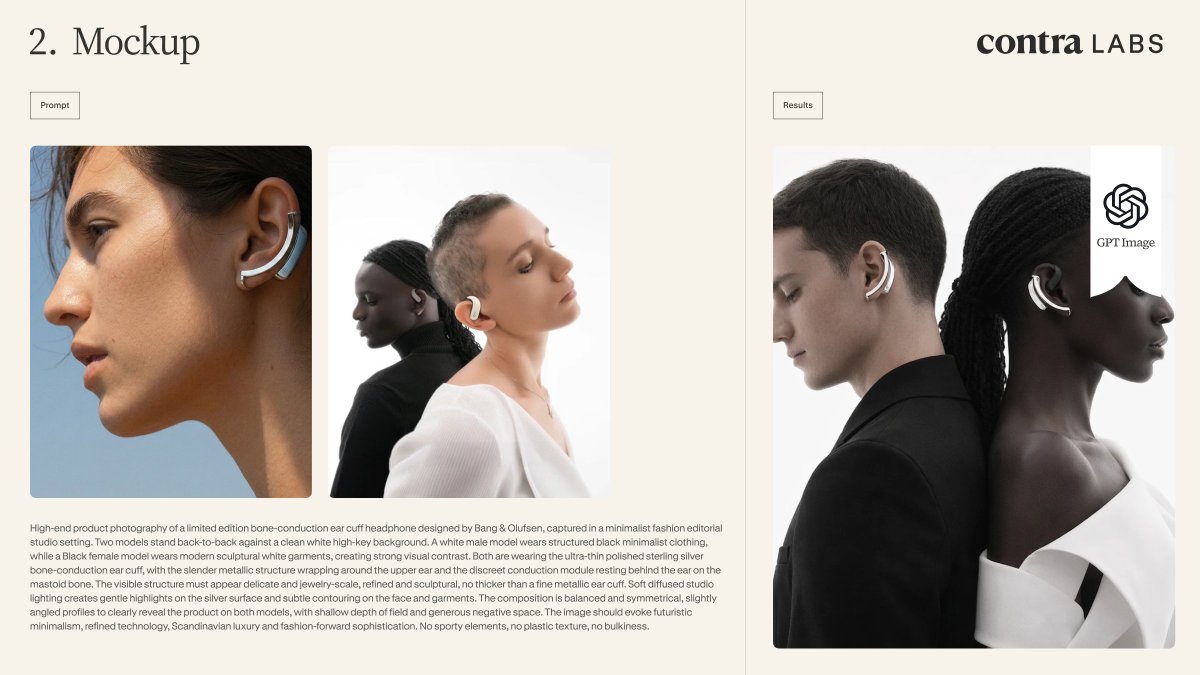
In my product design workflow, AI helps me turn my ideas into visual concepts and then renders. What used to take me 2 months now takes 2 days.Blank Space Studio
Once I'm happy with a clip, I could use it throughout the process, as a reference for tone, pacing, and transitions in the brand film, or as visual direction across touchpoints like social cuts, motion loops, or landing pages. It helps keep everything aligned.Blake Steven, creative director and designer (over $100k in recent earnings)
AI can help provide more real-life product demos without placeholder text or images so that audience and client will get proper understanding. This decreases the time to alignment before creating the final deliverable.Jithin Kumar, product designer (over $100k earned on Contra)
Stage 3: Refinement
This is where AI-generated content gets scrutinized the hardest and discarded the most. A near-final artifact is being edited toward production readiness. Small adjustments carry outsized consequences. The creative's own standards take over.
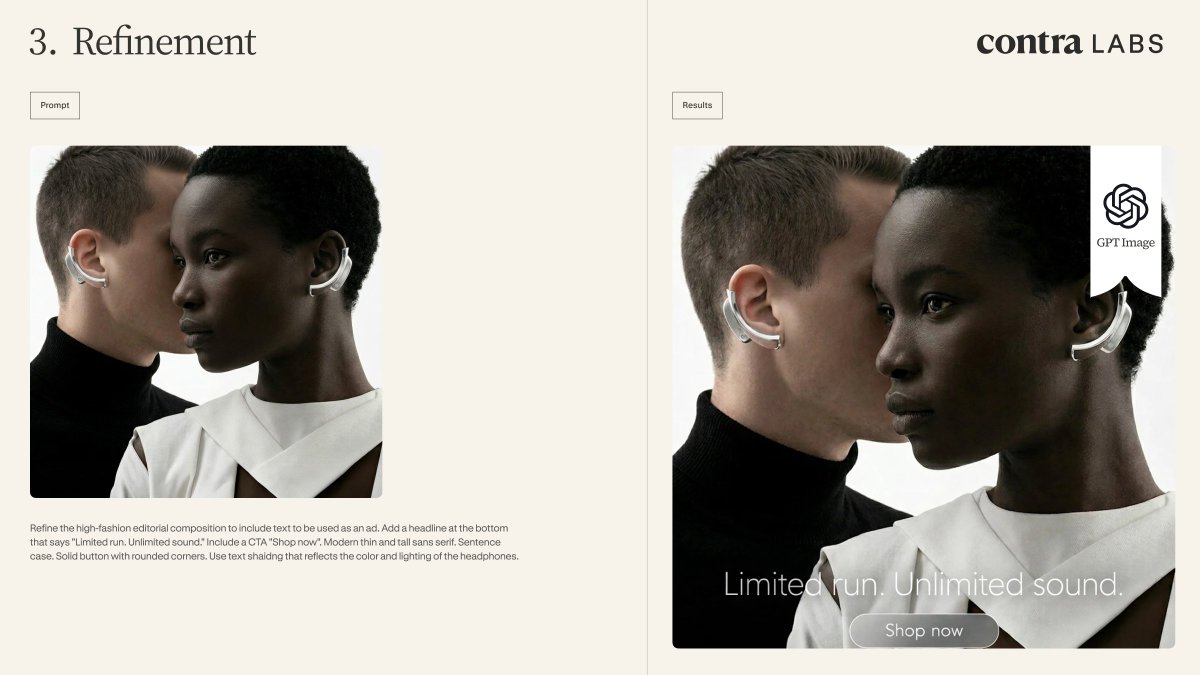
In post-production, I use AI to handle visual refinements such as resizes, retouches, and overall enhancements.Pablo Lopez, motion designer (Apple, Google, Microsoft, Disney)
I am very specific on details, so I want to retain as much control as I possibly can. I am always looking for tools like Claude that help me by getting ideas out quickly, or doing something that is time consuming, while still allowing me to take over at any point.Alex Karpodinis, UI/UX and Framer designer
That's the pattern. Creatives open the door wide at ideation, narrow it at mockup, and hold it firmly at refinement. AI fits differently at each stage, and the best practitioners know exactly where to hand off and where to take back control.
How we ran this study → Methodology